

If you’re a tax or accounting professional you probably already know all about the Earned Income Tax Credit (EITC). However if you are new to the tax industry or maybe just need a brief refresher on the EITC then this is the article for you. In this article we are taking a look at the Earned Income Tax Credit, covering qualifications, income requirements, and common mistakes made when filing the EITC.
Qualifications
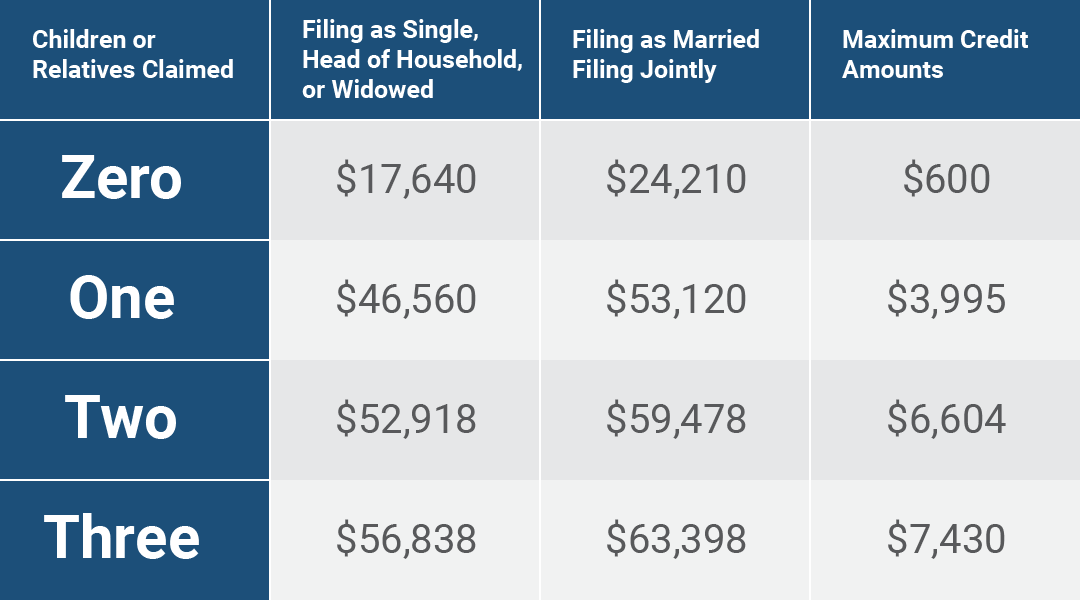
The generalized version of “who qualifies” is simply low- to moderate-income workers with qualifying children. However, for this article we want to get a little more in depth than that. First, your earned income for that tax year must be less than $63,398. If you invested in that tax year then your investment income must be under $11,000. The taxpayer must have a valid Social Security number and has to be a legal resident of the United States. Finally, in order to receive the EITC you cannot have already filed out Form 2555, Foreign Earned Income. Special qualifications and rules exist for military, clergy, those with disabilities, and married filing separately. You can check your qualifications on the IRS site here.
Income
The Earned Income Tax Credit must be applied to, well, earned income. Earned income consists of all the taxable wages you made in that tax year either from working for someone else or for yourself. However your earned income is not the only factor to qualify for this credit. The income you earn during the tax year must be adjusted based on certain factors. Education expenses, student loan interest, alimony payments, or contributions to a retirement plan are all factors that can alter the gross income amount creating your AGI or Adjusted Gross Income. Below is a table to help tax preparers and taxpayers find the maximum AGI for the EITC.
5 Common Errors
None of us are perfect and we all make mistakes. If you’ve filed a tax return claiming the EITC and that return has errors then you or your client may end up facing an audit, being denied part of the credit, or it may take longer to get their refund. Here are the five most common errors we see tax preparers make when claiming the EITC.
Child Doesn’t Qualify
A fairly common error that occurs when the child you are trying to claim doesn’t meet the qualification rules. The child must be related to the taxpayer and live in the same home as them for more than half the year. Qualifying children must also not have filed a joint return with anyone else. Age is also a factor along with their disability status but those can be read on further here.
More Than One Person Claims the Child
This one is self-explanatory but make sure the child you are attempting to claim hasn’t already been claimed by someone else on their return.
Verify Social Security Numbers
This is an obvious error but one we see a lot. If there is an error on a tax return or it isn’t transmitting to the IRS then verify that all social security numbers and names match up on the return.
Married but Filed as Single or HOH
If you are legally married in the United States but attempting to claim the EITC as single or head of household that will result in an error on the return.
Over/Under Reporting Income
Make sure to accurately report the income of the taxpayer attempting to claim the EITC. Include all relevant forms such as; W2s, W2G, 1099K, 1099-Misc, and any other record of income earned in 2023.
We hope this refresher of the Earned Income Tax Credit has enabled you, as a tax professional, to better understand the credit and if your clients qualify. The EITC is a great credit capable of helping your clients save hundreds on their tax return either reducing the total amount they owe or increasing their refund amount.
If you found this information helpful and would like to read more then sign-up for email alerts whenever a new blog is published on our site.